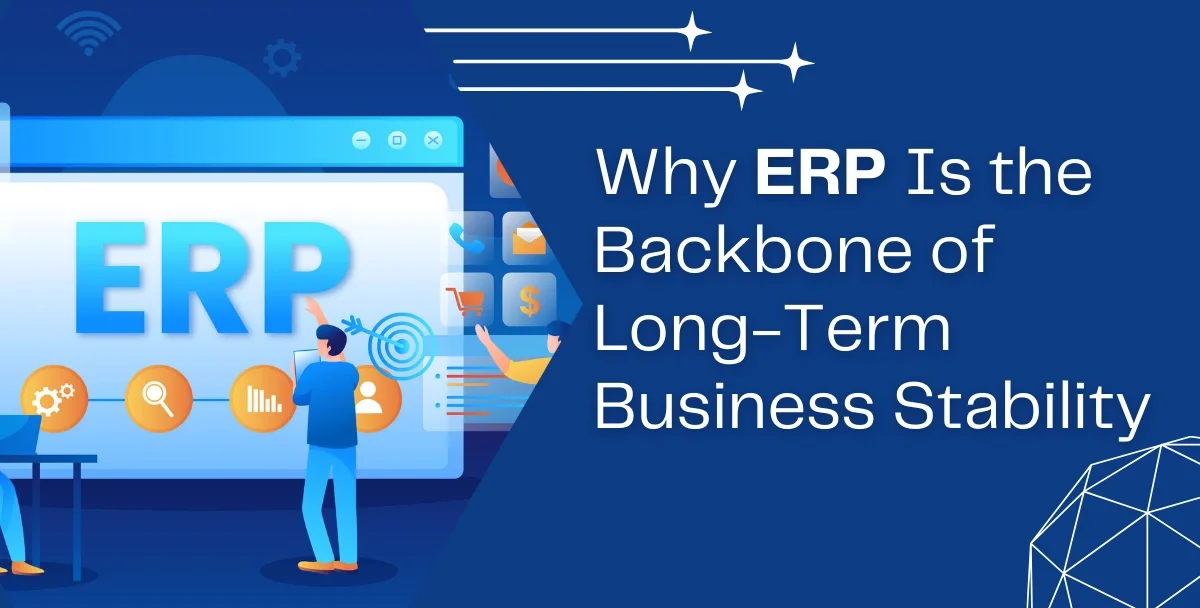
In today’s fast-moving business environment, stability is not just about maintaining steady operations — it’s about building systems that allow your company to adapt, scale, and perform consistently over time. Organizations that achieve long-term stability typically share one common factor: they operate on a unified digital foundation that connects every department and process.
This is where ERP becomes indispensable. By integrating finance, operations, HR, supply chain, and customer management into a single ecosystem, ERP transforms how businesses operate and grow. In this article, we’ll explore why ERP implementation is the backbone of sustainable success and how it helps organizations maintain control, visibility, and resilience in an ever-changing market.
Understanding Business Stability in the Modern Era
Long-term business stability means more than steady revenue. It includes:
- Predictable operations
- Financial clarity
- Process consistency
- Scalable infrastructure
- Strong risk management
Without the right systems, even profitable companies can face operational breakdowns as they grow. ERP provides the structure needed to maintain balance between growth and control.
How ERP Creates a Strong Operational Foundation
1. Centralized Data for Better Decision-Making
One of the biggest threats to stability is fragmented data. When departments operate on separate tools, leadership struggles to get a clear picture of performance.
ERP eliminates data silos by creating a single source of truth. Decision-makers gain real-time insights into finances, operations, and productivity, allowing them to respond quickly to challenges.
2. Standardized Processes Across Departments
Inconsistent workflows often lead to errors, delays, and inefficiencies. ERP standardizes processes so that tasks are performed the same way every time, regardless of department or team.
This consistency reduces operational risks and ensures predictable outcomes — a critical factor for long-term stability.
3. Financial Visibility and Control
Financial health is the core of business stability. ERP provides:
- Real-time financial reporting
- Budget tracking
- Cost monitoring
- Revenue analysis
With accurate financial data, businesses can plan confidently and avoid unexpected cash flow issues.
ERP as a Risk Management Tool
Every growing company faces risks, including operational inefficiencies, compliance challenges, and market fluctuations. ERP mitigates these risks by providing:
- Audit trails and compliance tracking
- Automated controls and approvals
- Predictive analytics for planning
This proactive approach helps organizations anticipate problems instead of reacting to them.
The Role of ERP in Supporting Sustainable Growth
Scalable Infrastructure
As businesses expand, manual processes and disconnected tools struggle to keep up. ERP provides a scalable framework that grows alongside the organization without requiring constant restructuring.
Resource Optimization
ERP ensures resources — whether financial, human, or operational — are used efficiently. This optimization reduces waste and improves profitability over time.
Improved Collaboration
When all teams work within the same platform, communication improves significantly. Departments align around shared goals, reducing friction and improving execution.
Integrating Customer and Operational Insights
While ERP focuses on internal operations, integrating it with CRM Software creates a complete business ecosystem. This connection enables companies to align customer insights with operational planning, ensuring better service delivery and more accurate forecasting.
Why Stability Requires Customization
Every organization has unique workflows, industry requirements, and growth goals. A one-size-fits-all system rarely delivers optimal results.
That’s why ERP Customization in Dubai plays a critical role in ensuring the system aligns perfectly with business processes. Customization allows companies to:
- Adapt workflows to real operational needs
- Integrate industry-specific features
- Enhance reporting and analytics
This tailored approach ensures higher adoption rates and long-term value.
The Competitive Advantage of ERP Adoption
Companies that implement ERP early often gain a significant edge over competitors because they can:
- Respond faster to market changes
- Maintain consistent service quality
- Optimize costs
- Scale operations efficiently
In competitive markets, operational stability becomes a powerful differentiator.
How ERP Supports Leadership Strategy
Executives and managers rely on accurate data to make strategic decisions. ERP dashboards provide a real-time overview of key performance indicators, helping leadership:
- Identify growth opportunities
- Monitor performance trends
- Plan long-term strategies
This strategic visibility ensures the organization remains proactive rather than reactive.
Local Expertise Matters
Implementing ERP successfully requires understanding local business environments and operational challenges. Working with an experienced ERP software company in Dubai ensures smoother implementation, better support, and solutions aligned with regional requirements.
Businesses exploring ERP Software in Dubai benefit from localized expertise that supports compliance, scalability, and integration with existing systems.
Build a Stable Future With the Right ERP
If your business is aiming for predictable growth, operational efficiency, and long-term resilience, ERP is the foundation you need.
Long-Term ROI of ERP Implementation
ERP is not just a technology investment — it’s a strategic asset that delivers value over years. Organizations typically experience:
- Reduced operational costs
- Higher productivity
- Faster decision-making
- Improved customer satisfaction
Over time, these benefits compound, creating a stronger and more resilient business.
The Future of Stable Businesses Is Integrated
The future belongs to organizations that operate on connected systems capable of adapting to change. ERP provides the flexibility and visibility needed to navigate economic shifts, evolving customer expectations, and operational complexity.
Companies that prioritize integration and automation today are better prepared for tomorrow’s challenges.
Final Thoughts
ERP is far more than a management tool — it’s the backbone that supports every aspect of a stable and sustainable business. From financial control and process consistency to strategic planning and scalability, ERP ensures organizations remain resilient in an unpredictable environment.
If your goal is long-term stability rather than short-term fixes, investing in ERP is one of the most impactful decisions you can make. With the right implementation partner like CubeZix and a clear strategy, ERP becomes the foundation that supports growth, efficiency, and success for years to come.